
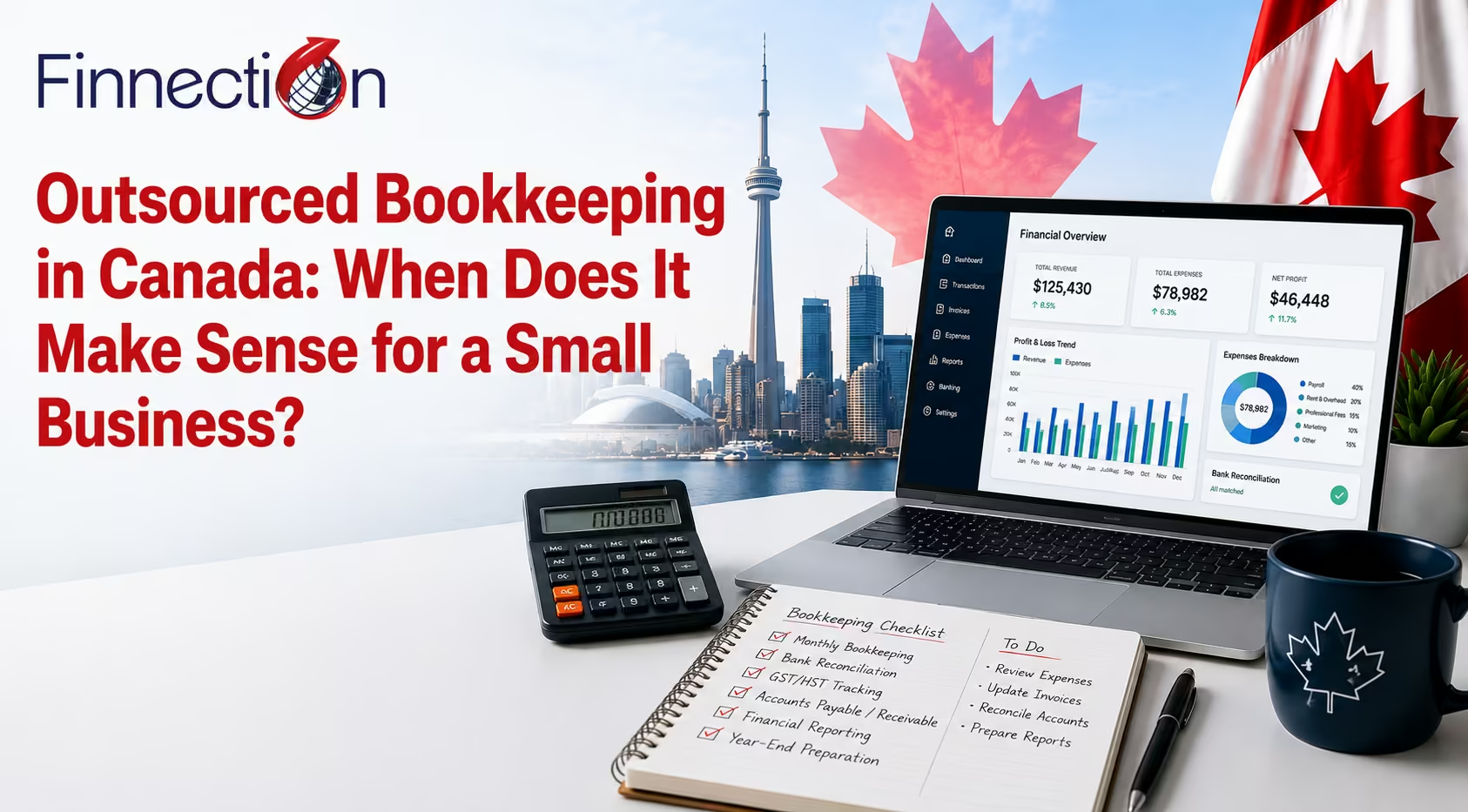
There’s a point in almost every growing business where bookkeeping starts taking more time than expected.
At first it’s manageable.
A handful of invoices. Some expenses. A bank reconciliation. Maybe the owner handles everything on weekends.
Then the business grows.
Payroll enters the picture. GST/HST needs attention. More transactions come through. Customers owe money. Suppliers need paying and suddenly Saturday morning bookkeeping becomes Saturday morning, afternoon and half of Sunday too.
That’s usually when business owners start searching for outsourced bookkeeping in Canada.
And it’s a sensible question.
What Does Outsourced Bookkeeping Actually Mean?
It’s simpler than it sounds.
Instead of employing someone internally to handle every bookkeeping function, the business works with an external accounting or bookkeeping provider.
That provider may handle things like transaction recording, bank reconciliations, accounts payable, accounts receivable and financial reporting depending on the arrangement.
The business still owns its financial information and makes the decisions. It simply doesn’t have to process everything internally.
Signs You’ve Outgrown DIY Bookkeeping
I don’t think every new business needs outsourced accounting immediately.
There comes a point, though, when doing it yourself starts costing more than you’re saving.
Watch for signs like these:
- Your bookkeeping is regularly several weeks behind
- GST/HST preparation creates stress every filing period
- You don’t know your current profit without checking the bank account
- Customer invoices aren’t being followed up consistently
- Tax season requires a major cleanup every year
That last one is particularly common.
If your accountant has to reconstruct months of activity before preparing anything useful, the system isn’t really working.
Why Monthly Bookkeeping Changes Decision Making
One reason businesses outsource bookkeeping is compliance.
For me, the bigger benefit is visibility.
Imagine considering a new employee.
If your books are six months behind, you’re making that hiring decision partly on instinct.
With current financial statements, you can look at revenue, margins, recurring expenses and cash flow first.
Same decision. Very different level of confidence.
What About GST/HST?
Canadian businesses that are registered for GST/HST need reliable transaction records to support their reporting.
Sales tax collected needs to be tracked correctly. Eligible input tax credits need appropriate documentation.
When bookkeeping is current, this becomes part of the regular accounting process.
When records are messy, every filing period becomes a small investigation.
Nobody wants that.
Outsourced Bookkeeping vs Hiring an In House Bookkeeper
Both approaches can work.
An in house bookkeeper gives you someone dedicated to the business and can make sense when transaction volume is high enough to require constant attention.
Outsourcing offers something different. You can access accounting support without carrying the full cost and responsibilities associated with another employee.
For a small or medium business, outsourced support can also provide access to a wider range of knowledge than one junior internal hire may have.
Cost isn’t the only consideration.
Think about continuity, experience, reporting quality, software knowledge and whether the provider understands Canadian tax and sales tax requirements.
What Should a Good Bookkeeping Service Provide?
Before hiring anyone, ask practical questions.
How often will the accounts be updated?
Who handles reconciliations?
What financial reports will you receive?
How are missing documents followed up?
Can the provider support you as the business grows?
You don’t need fancy terminology.
You need a process that works.
Bookkeeping Should Give You Time Back
This part is easy to underestimate.
Every hour a business owner spends categorizing transactions is an hour not spent selling, managing staff or improving the company.
Of course, owners should understand their financials.
But understanding the numbers and manually producing every number are two different jobs.
At Finnection, we provide bookkeeping and accounting support for Canadian businesses that want current financial information without building everything internally. We help organize the numbers, maintain reporting and support ongoing tax and accounting needs.
The result should be pretty simple.
You spend less time chasing spreadsheets and more time using the information inside them.
Frequently Asked Questions
1. How much does outsourced bookkeeping cost in Canada?
Costs vary according to transaction volume, complexity and the services required. A small company with straightforward monthly transactions will usually have different needs from a growing company managing payroll, GST/HST and multiple accounts.
2. Is outsourced bookkeeping suitable for small businesses?
Yes. It can be particularly useful for businesses that need professional financial records but aren’t ready to hire a full time internal finance employee.
3. Can a bookkeeping service help with GST/HST?
A provider with Canadian accounting experience can help maintain the records needed for GST/HST reporting and support accurate preparation based on the scope of services agreed.
4. How often should business books be updated?
Monthly bookkeeping is a practical minimum for many businesses. Higher transaction businesses may benefit from more frequent processing.
5. Does Finnection provide bookkeeping for Canadian businesses?
Yes. Finnection supports Canadian businesses with bookkeeping, financial reporting and accounting services designed to keep records organized and useful throughout the year.
For information on “outsourced bookkeeping in Canada”, contact finnection via email at [email protected] or call us at our numbers Canada: +1 647 795 5462 | UAE: +971 50 24 786 81 and US: +1 407 2200 878
Disclaimer: Above information is subject to change and represent the views of the author. It is shared for educational purposes only. Readers are advised to use their own judgement and seek specific professional advice before making any decision. Finnection is not liable for any actions taken by reader based on the information shared in this article. You may consult with us before using this information for any purpose.