
Growing a business beyond one country is exciting.
Landing your first international client feels like progress. Opening operations in another market feels even bigger. Suddenly you’re dealing with different currencies, new customers and opportunities that didn’t exist a year ago.
Then the tax questions begin.
“Do I have to pay tax in both countries?”
“Which country has the right to tax this income?”
“What happens if my business operates in more than one jurisdiction?”
They’re valid questions. And honestly, they’re questions every growing business should ask before expanding, not after.
The good news is that double taxation can often be reduced or avoided with proper planning. The key word there is planning.
What Is Double Taxation?
Double taxation happens when the same income becomes taxable in two different countries.
Imagine a business based in Canada providing services to clients in another country. Depending on how the business is structured and where the income is earned, there may be reporting obligations in both places.
Without understanding the applicable tax rules, the same profits could potentially be taxed twice.
That’s something no business owner wants.
Tax Treaties Play an Important Role
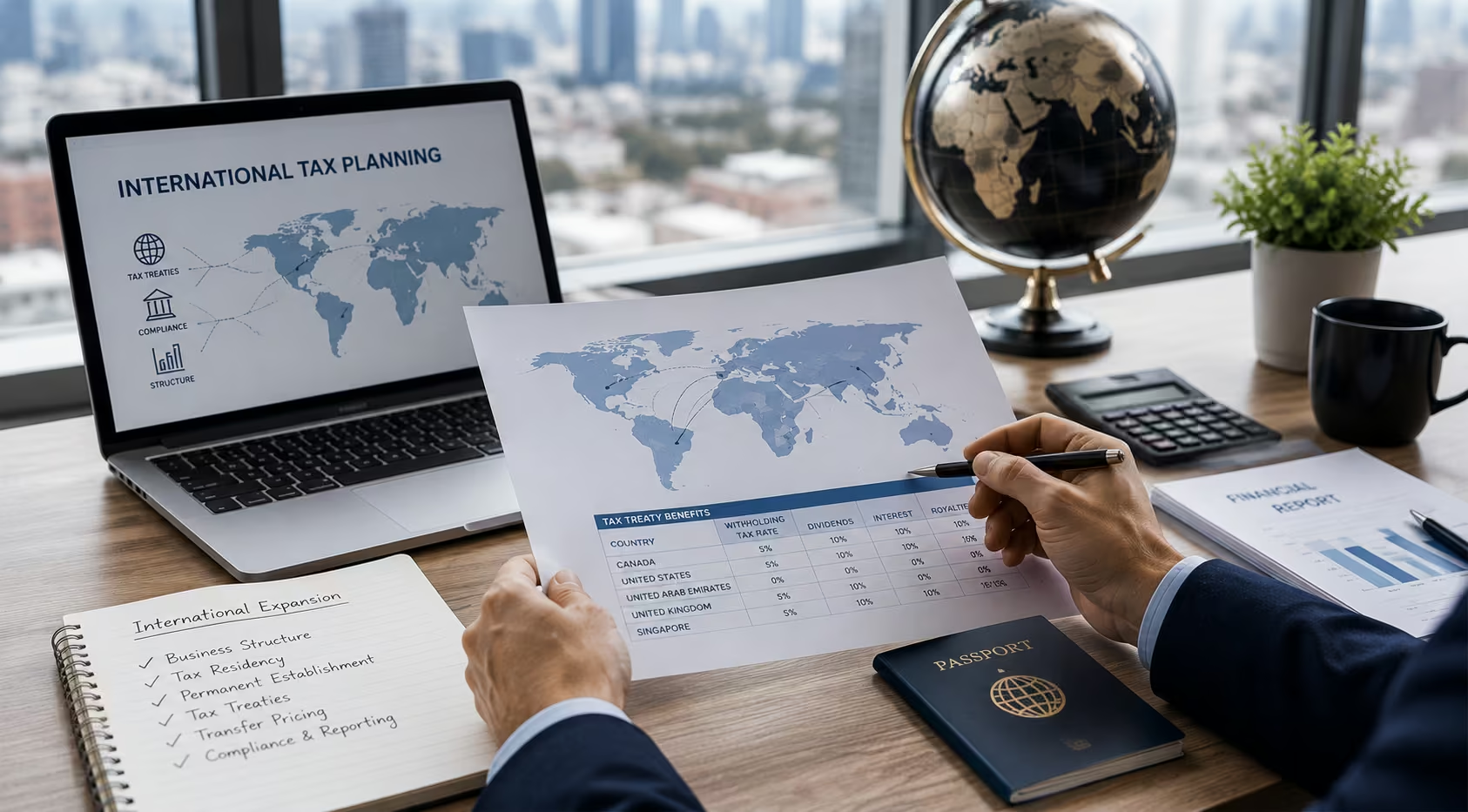
Many countries have signed tax treaties with one another to reduce the risk of double taxation.
These agreements help determine which country has the primary right to tax certain types of income and how relief should be provided where taxes apply in more than one jurisdiction.
Tax treaties can also reduce withholding taxes on certain payments, depending on the circumstances.
But here’s the important part.
A tax treaty doesn’t automatically solve every problem.
Businesses still need to understand how those agreements apply to their specific situation.
Business Structure Matters More Than You Think
I’ve seen businesses expand internationally without giving much thought to their legal structure.
At first everything seems fine.
Clients are paying. Revenue is growing. The business feels successful.
Months later, questions start appearing.
Where should invoices be issued from?
Which company should receive the income?
Does operating in another country create additional tax obligations?
These decisions affect both compliance and long-term tax efficiency.
Fixing the structure later is almost always harder than planning it properly from the beginning.
Permanent Establishment Can Change Everything
One phrase that often surprises business owners is Permanent Establishment, sometimes called PE.
In simple terms, if a business has enough presence or business activity in another country, that country may gain the right to tax part of the company’s profits.
This doesn’t always require opening a formal office.
In some situations, employees, representatives or ongoing business operations can create tax exposure.
That’s why expanding internationally should never be viewed only as a sales decision.
It’s also a tax planning decision.
Keep Financial Records Organised Across Countries
International businesses usually manage more than one currency, multiple tax systems and different reporting requirements.
Without organised bookkeeping, things become confusing very quickly.
Good financial records should clearly show:
- Income earned in each country
- Business expenses by jurisdiction
- Cross-border payments
- Currency conversions
- Supporting invoices and contracts
When records are organised from the beginning, tax reporting becomes significantly easier later.
Planning Early Creates More Options
One of the biggest mistakes businesses make is treating international tax planning as something to think about after expansion.
By then, many important decisions have already been made.
Planning before entering a new market provides much greater flexibility. It allows businesses to choose the right structure, understand reporting obligations and reduce unnecessary tax exposure before transactions begin.
That approach usually saves both time and money.
International Growth Should Feel Exciting, Not Uncertain
Expanding internationally creates incredible opportunities.
- New markets.
- New partnerships.
- New revenue streams.
But growth also brings new responsibilities.
Understanding cross-border taxation early helps businesses expand with confidence instead of constantly worrying about compliance.
At Finnection, we help businesses navigate international accounting, cross-border tax planning and financial reporting across multiple jurisdictions. Whether you’re operating between Canada and the US, expanding into the UAE or serving clients globally, our goal is to make international growth financially efficient and fully compliant.
Because crossing borders should help your business grow.
Not create tax problems you never expected.
Frequently Asked Questions
What is double taxation?
Double taxation occurs when the same income becomes taxable in more than one country because of different tax rules or reporting obligations.
How can businesses reduce double taxation?
Many countries have tax treaties that help prevent or reduce double taxation. Proper business structuring, accurate reporting and professional tax planning also play an important role.
What is a Permanent Establishment?
A Permanent Establishment is a level of business presence in another country that may create local tax obligations. The rules vary depending on local tax laws and applicable tax treaties.
How can Finnection help businesses operating internationally?
Finnection provides cross-border accounting, international tax planning, bookkeeping and compliance support to help businesses expand confidently while managing tax obligations across multiple jurisdictions.
For information on “Avoid Double Taxation”, contact finnection via email at [email protected] or call us at our numbers Canada: +1 647 795 5462 | UAE: +971 50 24 786 81 and US: +1 407 2200 878
Disclaimer: Above information is subject to change and represent the views of the author. It is shared for educational purposes only. Readers are advised to use their own judgement and seek specific professional advice before making any decision. Finnection is not liable for any actions taken by reader based on the information shared in this article. You may consult with us before using this information for any purpose.