
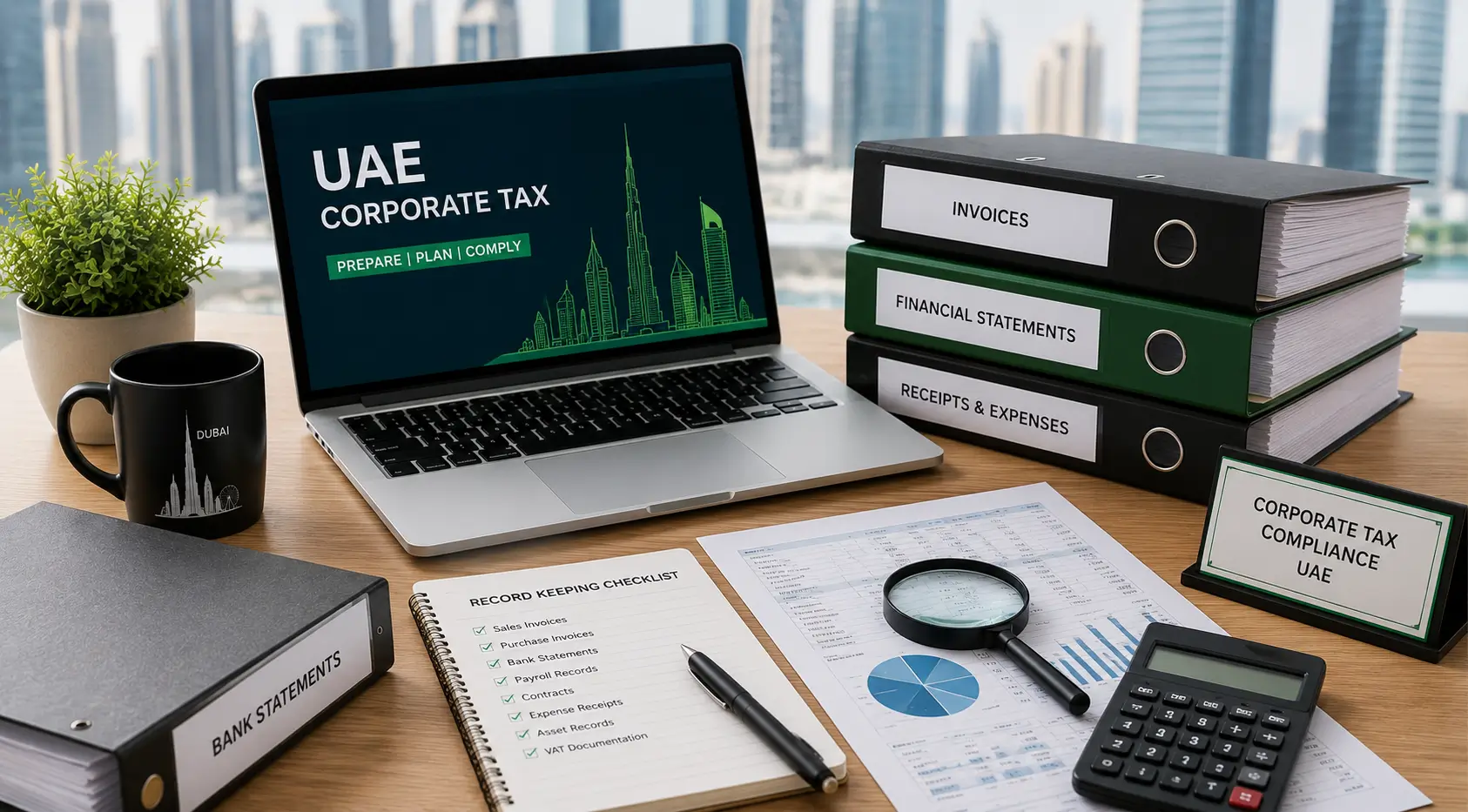
When corporate tax was introduced in the United Arab Emirates, most conversations revolved around tax rates, registration deadlines and who needed to register. Those were the obvious questions.
Now the conversation has changed.
Business owners are starting to ask something much more practical.
“What records do we actually need to keep?”
It’s a good question because corporate tax isn’t just about filing a return. Your tax return is built on the information sitting behind it. If those records aren’t complete, accurate or easy to verify, preparing the return becomes much harder than it needs to be.
And honestly, this is where many businesses struggle.
Good Record Keeping Is More Than Filing Papers
Some people still picture record keeping as a folder full of invoices sitting in a cabinet.
That isn’t enough anymore.
Modern accounting records should tell the complete financial story of your business. Every sale, every expense, every payment received and every amount paid should be supported by proper documentation.
When everything connects properly, financial reporting becomes much easier.
When it doesn’t… small issues can turn into very large ones surprisingly quickly.
What Records Should Businesses Keep?
Every business is different, but there are certain financial records that almost every company should maintain consistently.
These usually include:
- Sales invoices
- Purchase invoices
- Bank statements
- Payroll records
- Expense receipts
- Customer and supplier contracts
- Asset purchase records
- VAT documentation where applicable
Keeping these documents organised throughout the year is far easier than trying to collect everything at the last minute.
Trust me on that one.
Accurate Bookkeeping Makes Corporate Tax Simpler
Corporate tax calculations begin with your financial statements.
If revenue hasn’t been recorded correctly or expenses have been classified inconsistently, your accounting profit may not reflect the true position of the business.
That creates extra work.
Sometimes it creates unnecessary tax.
Sometimes it delays filing because adjustments need to be reviewed.
Regular bookkeeping helps avoid all of that.
Monthly updates also make it much easier to identify missing transactions while they’re still fresh.
Digital Records Are Becoming the Standard
Many businesses have already moved away from paper files.
Cloud accounting software, secure digital storage and electronic document management have made record keeping much more efficient.
The biggest advantage isn’t simply convenience.
It’s accessibility.
When records are organised digitally, finding an invoice from six months ago takes seconds instead of hours.
That matters during audits, financial reviews and tax preparation.
Don’t Wait Until Year End
One of the biggest mistakes businesses make is assuming record keeping can wait until the end of the financial year.
It rarely works.
By then, documents may have been misplaced. Staff may not remember why certain transactions occurred. Bank reconciliations become more difficult.
The workload grows far beyond what it needed to be.
Small monthly reviews prevent that situation completely.
Record Keeping Helps More Than Tax
This is something I often tell business owners.
Good records aren’t only for the tax authority.
They’re for you.
When financial information is current, you can answer important questions quickly.
Are profits improving?
Is cash flow getting tighter?
Which services generate the strongest margins?
Should hiring plans continue as expected?
Without reliable records, those answers become guesses.
With organised accounting, they become decisions backed by facts.
A Strong Financial Foundation Starts With Consistency
Corporate tax has encouraged many UAE businesses to improve their financial systems.
That’s actually a positive change.
Companies with organised bookkeeping usually make better business decisions because they understand their financial position throughout the year instead of discovering it after the year has ended.
At Finnection, we help businesses establish reliable bookkeeping systems, maintain accurate financial records and prepare for corporate tax with confidence. Our goal isn’t only compliance. It’s giving business owners clear financial information they can actually use to grow.
Because strong businesses aren’t built on assumptions.
They’re built on numbers you can trust.
Frequently Asked Questions
How long should businesses keep accounting records in the UAE?
Businesses should maintain accounting records and supporting documentation for the period required under applicable UAE tax laws and regulations. Keeping organised records throughout the year makes compliance much easier.
What documents are important for corporate tax?
Businesses should maintain invoices, bank statements, payroll records, contracts, expense receipts, asset records and any documents supporting financial transactions.
Can digital records be used?
Yes. Many businesses now maintain secure electronic accounting records and digital copies of supporting documents, making financial management more efficient.
How can Finnection help?
Finnection supports businesses with bookkeeping, accounting, financial reporting and corporate tax preparation, helping companies maintain accurate records while staying compliant with UAE regulations.
For information on “UAE Corporate Tax Record Keeping”, contact finnection via email at [email protected] or call us at our numbers Canada: +1 647 795 5462 | UAE: +971 50 24 786 81 and US: +1 407 2200 878
Disclaimer: Above information is subject to change and represent the views of the author. It is shared for educational purposes only. Readers are advised to use their own judgement and seek specific professional advice before making any decision. Finnection is not liable for any actions taken by reader based on the information shared in this article. You may consult with us before using this information for any purpose.